Park Krakowski im. Marka Grechuty
The work is based on an archival photograph of Park Krakowski from the period when a public swimming pool operated there — one of many attractions that disappeared from the urban landscape after World War I.
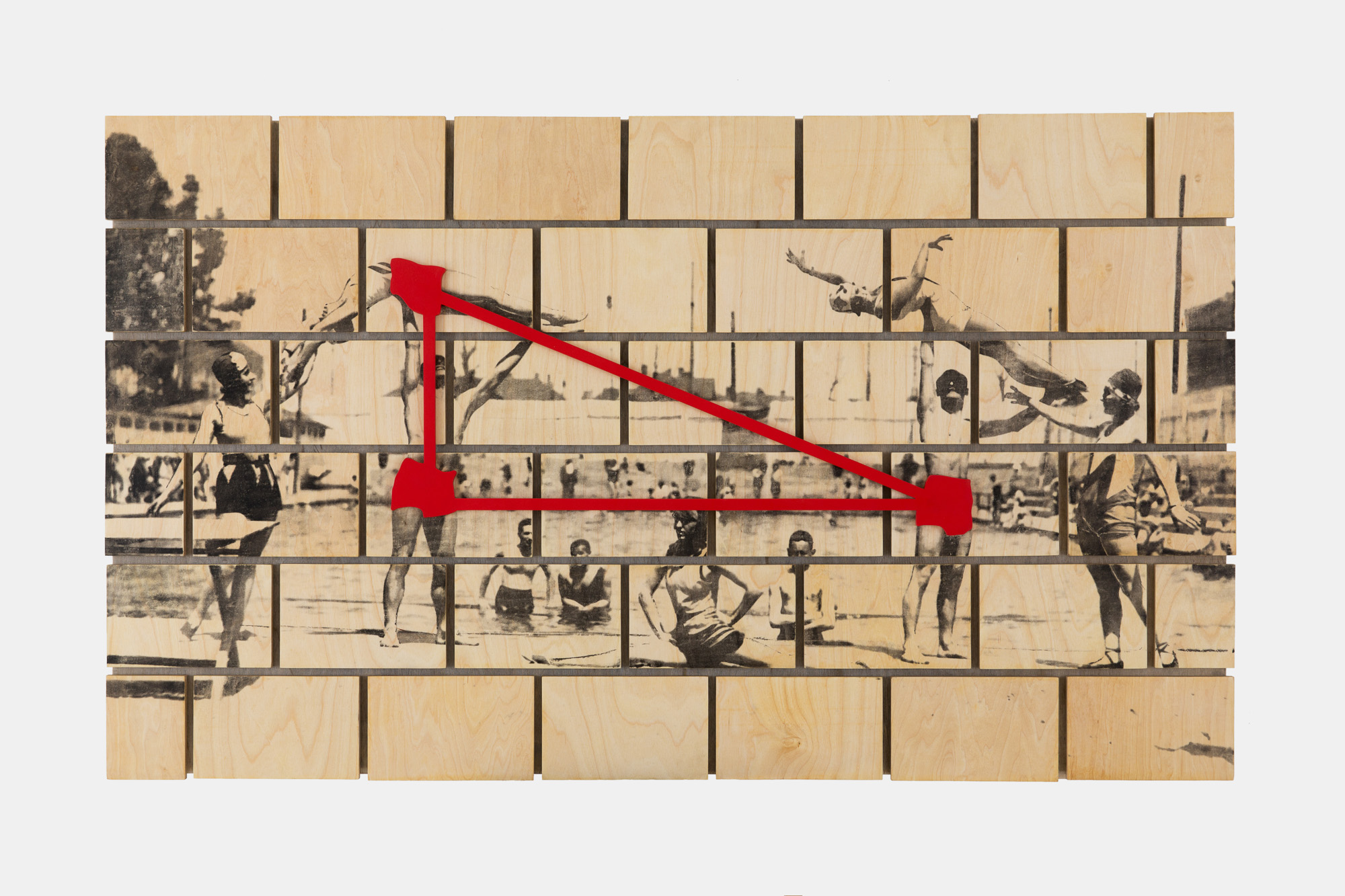
History of Park Krakowski
Park Krakowski im. Marka Grechuty was established in 1885 on the initiative of city councillor Stanisław Rehman. Conceived as a modern recreational park inspired by Viennese garden design, it quickly became one of the most important leisure spaces for the residents of Kraków.
Between 1885 and 1914, the park offered an exceptionally rich program of attractions, including:
– a public swimming pool,
– a pond with piers,
– a concert pavilion and summer theatre,
– restaurants and cafés,
– a bowling alley and cycling track,
– a winter ice rink,
– a small zoo.
At the turn of the century, it functioned as a hybrid space combining recreation, culture and entertainment — almost a proto-amusement park within the urban fabric of Kraków.
After World War I (post-1918), the park gradually lost part of its original area and infrastructure due to urban development. During the interwar and post-war periods, many of its historic attractions disappeared, including the original swimming pool.
Since the 1970s, the park has also served as an open-air sculpture venue. In 2018, following a comprehensive revitalization, it was officially named after Marek Grechuta.
Today the park is significantly smaller than in its original form, yet its history recalls a period when it was one of the most multifunctional and progressive recreational environments in Kraków.